Measure the actual route
Measure along furniture and walls rather than taking the straight-line distance. Allow some movement for a laptop and its connector, but avoid a large coil under the chair. Doors must not pinch the cable. Use suitable cable protection across walking routes or choose a different path.
A ready-made patch lead connects equipment and existing network outlets. Permanent building cabling has different requirements, including cable construction, installation components and applicable fire-safety provisions. Have such routes planned appropriately instead of hiding an arbitrary long desk cable inside a wall.
Compare the whole connection
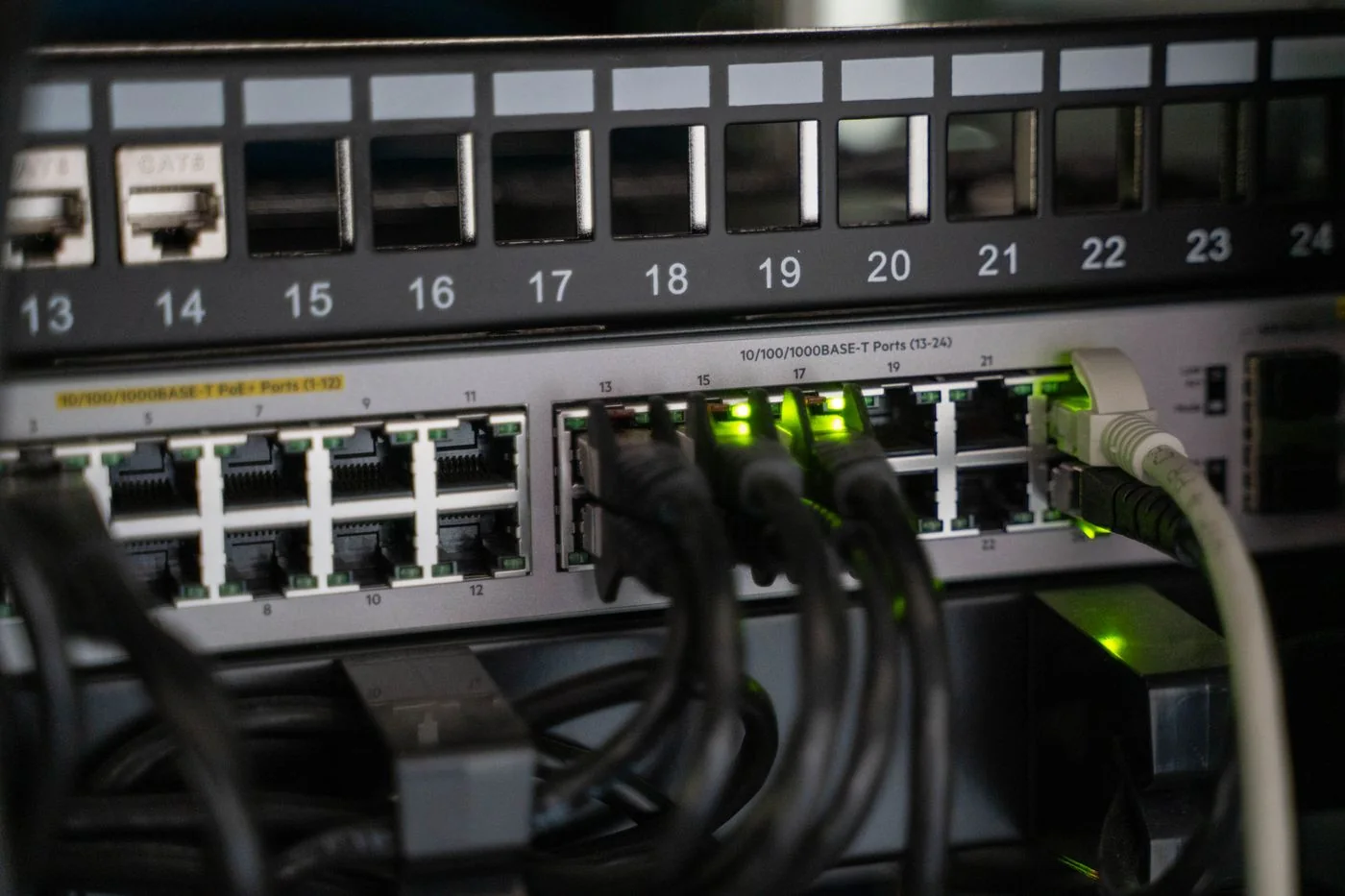
Check the Ethernet speeds of the router, switch and client. A higher-category cable cannot turn a slower equipment port into a faster one. Suitable Cat 5e or better cabling can support ordinary short gigabit connections; higher requirements should be checked against length and manufacturer specifications. An upgrade plan should also account for existing outlets and installed cabling.
Look for traceable specifications and sound connectors. Broken latches or sharply damaged cable can create intermittent faults. A flat or unusually thin design is not automatically unsuitable, but should be specified for the intended use. Do not choose solely by a prominent category label.
For Power over Ethernet, power requirements are part of the assessment too. Use cables and connection components suitable for the intended PoE application and follow the equipment specifications. A damaged or unsuitable cable cannot be improved by attaching a more powerful switch. For long or permanently installed routes, proper assessment is more useful than joining several arbitrary extension leads together.
Verify the installed connection
Check the link speed negotiated by the devices and try a real transfer. If the connection negotiates a lower rate than expected, compare a short known-working cable directly between the same equipment. This helps distinguish the new route from a limitation in the devices themselves.
Label both ends when several cables look similar. A description such as office switch to printer remains more understandable than a colour with no recorded meaning. Release the latch and pull the connector body when disconnecting. Keep one short, tested spare so future connection problems can be investigated without waiting for another purchase.